International SEO Is Complex
When you expand beyond a single market, everything gets harder. You're not just translating content. You're making structural decisions about domains vs. subdomains vs. subdirectories. You're implementing hreflang tags that Google is famous for ignoring when implemented incorrectly. You're managing content across languages while avoiding duplicate content issues.
The mistakes are expensive. Get your structure wrong and you're stuck with it or facing a painful migration. Mess up hreflang and Google shows users the wrong language version. Neglect local signals and your translated content never ranks.
I've helped businesses expand from single markets to global presence, and helped global businesses fix international SEO setups that were actively hurting them.
Key Decisions
Structure: ccTLD vs. Subdomain vs. Subdirectory
The biggest decision in international SEO is how to structure your URLs:
Country-code TLDs (example.de, example.fr) - Strongest geo-signal, but expensive to maintain, requires building authority for each domain separately, and makes content sharing harder.
Subdomains (de.example.com) - Clear separation, but Google treats these somewhat separately for authority purposes. Middle ground that often ends up being worst of both worlds.
Subdirectories (example.com/de/) - Consolidates authority, easiest to manage, but requires proper hreflang implementation to signal language/country targeting.
There's no universally right answer. It depends on your resources, your markets, and your technical capabilities. I help you make this decision based on your specific situation, not generic best practices.

Hreflang Implementation
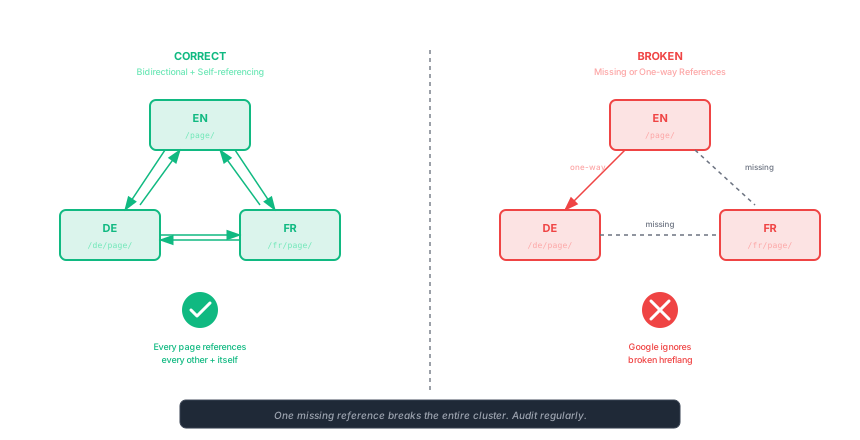
Hreflang tells Google which language and country version to show which users. It's simple in concept but notoriously difficult in execution:
<link rel="alternate" hreflang="en-gb" href="https://example.com/uk/page/" />
<link rel="alternate" hreflang="de" href="https://example.com/de/page/" />
<link rel="alternate" hreflang="x-default" href="https://example.com/page/" />
The problems: Every page needs to reference every other language version. One broken link in the chain and Google may ignore all of it. Automated implementations often have subtle bugs. New pages need hreflang added consistently.
I audit existing implementations, fix broken setups, and build systems that maintain hreflang correctly as content scales.
Language vs. Country Targeting
Are you targeting languages or countries? Spanish for all Spanish speakers, or separate versions for Spain, Mexico, and Argentina? English for the world, or separate versions for US, UK, and Australia?
The answer affects your hreflang strategy, your content strategy, and your resource requirements. More granular targeting means more content to maintain but better local relevance.
Common Problems I Fix
- Wrong Version Ranking - German users seeing the English version, US version ranking in UK searches
- Cannibalization Across Languages - Language versions competing against each other in the same market
- Broken Hreflang - Implementation errors causing Google to ignore your targeting signals
- Indexation Issues - Some language versions not getting indexed at all
- Duplicate Content - Same-language content for different countries being seen as duplicates
- Local Signal Problems - Translated content not ranking because it lacks local authority signals
What I Deliver
Structure Recommendation: Analysis of your situation and clear recommendation on domain/subdomain/subdirectory approach with reasoning.
Hreflang Audit and Implementation: Full audit of current implementation, fixes for issues found, and documentation for maintaining it correctly.
Technical Setup: Geo-targeting in Search Console, CDN configuration recommendations, and local hosting considerations.
Content Strategy by Market: Which content to translate, which to create locally, and how to prioritize markets.
Local Link Building Guidance: How to build local authority in target markets.
Who This Is For
International SEO matters if you're expanding to new markets, already operating globally but not ranking well in non-primary markets, or planning a multi-market launch.
It's particularly important for:
- E-commerce selling internationally
- SaaS with global customer base
- Publishers with multilingual content
- Brands entering new geographic markets
- Companies with regional offices and local websites
Real Experience
I've worked with sites in 30+ languages. I've fixed hreflang implementations that were breaking rankings across entire regions. I've helped plan market expansions from zero to global presence.
I helped Psik rank for Hebrew keywords in Israel, which meant dealing with the nuances of non-Latin character sets and right-to-left language SEO. International SEO isn't just European languages.
Pricing
International SEO projects are scoped individually based on number of markets, languages, and current state. Typical engagements:
International SEO Audit: $2,000 to $5,000 depending on complexity. Full assessment of current setup with recommendations.
Hreflang Implementation: $1,500 to $3,000 for clean implementation or fixing broken existing setup.
Market Expansion Strategy: $3,000 to $7,000 for full planning including structure, content, and technical recommendations.
Ongoing International Management: Part of monthly management engagement for businesses with continuous international SEO needs.