The Shift Has Already Happened
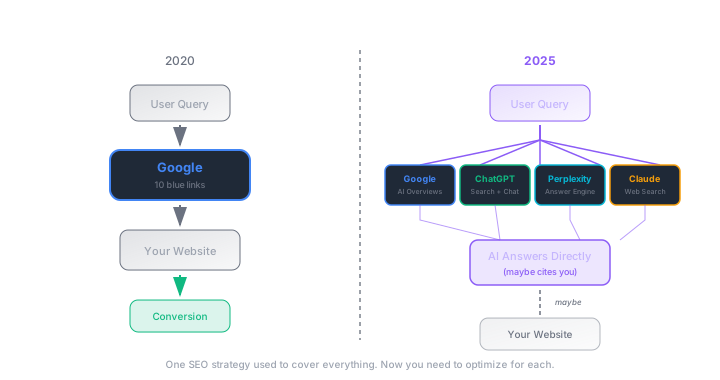
This isn't future speculation. Right now, today, your potential customers are typing questions into ChatGPT instead of Google. They're asking Perplexity for recommendations. They're using Claude to research purchases. And these AI systems are answering with confident authority, citing some sources and ignoring others.
If your company isn't being cited, you're invisible to a growing segment of your market. If your competitors are being cited and you're not, you're actively losing ground.
Here's what makes this different from Google SEO: AI doesn't just rank pages. It synthesizes information and makes recommendations. When someone asks "what's the best CRM for small businesses," AI doesn't show ten blue links. It gives an answer. It picks winners. Is your product in that answer?
How AI Search Actually Works
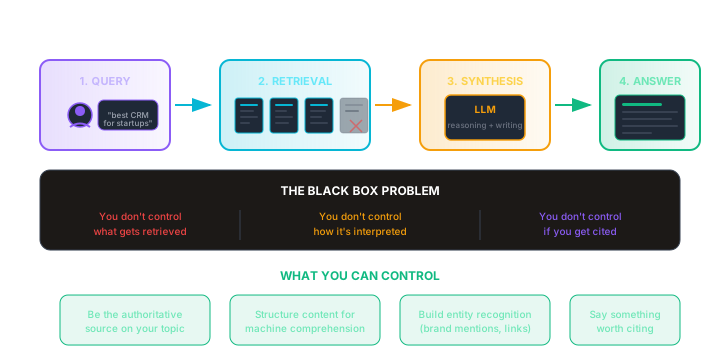
To optimize for AI, you need to understand how these systems find and use information:
Training Data. Models like GPT-4 and Claude were trained on massive datasets that include your website (if it was publicly accessible). What did your site say when the data was collected? That information is baked into the model's understanding. You can't change training data, but you can understand what's already in there.
Real-time Retrieval. Perplexity and ChatGPT's browsing mode fetch live information. They crawl the web in real-time and synthesize answers. This is where current optimization matters most. If your content is structured for AI consumption, you're more likely to be cited.
Citation Patterns. AI systems have preferences about what sources to cite. Generally: authoritative domains, clear factual statements, unique data, expert credentials. If your content is vague fluff, AI won't cite it even if it finds it.
Brand Recognition. AI models have learned brand associations from their training. If your brand is strongly associated with your category in the training data, you're more likely to be mentioned. This is where old-school brand building suddenly matters for search again.
What I Assess
The $1,499 AI Search Assessment includes:
- Current AI Visibility Audit - I test how each major AI system responds to queries about your industry, products, and competitors. Where do you appear? Where don't you? What are AI systems saying about you?
- Competitive Analysis - Who's getting cited instead of you? What are they doing differently? Sometimes small content changes have major citation impacts.
- Content Gap Analysis - What questions are people asking AI about your space? Where could you create content that becomes the authoritative source AI cites?
- Technical Readiness - Is your content structured for AI retrieval? Are you blocking or confusing AI crawlers? Is your content machine-readable?
- Brand Signal Assessment - How strongly is your brand associated with your category in AI model knowledge? What external signals are influencing this?
- Strategic Roadmap - Prioritized recommendations for improving AI visibility, with specific content and technical changes.
Common Problems I Find
Content Too Generic. AI cites specific, factual, unique information. If your content reads like every competitor's content, AI has no reason to cite you specifically. Original research, unique data, proprietary insights - these get cited.
No Clear Expertise Signals. AI systems look for signals of authority. Author credentials, citations from authoritative sources, association with expert communities. If your content is anonymous or uncredentialed, AI treats it as less trustworthy.
Blocking AI Crawlers. Some sites accidentally block AI crawlers while allowing Google. Check your robots.txt. If you're blocking GPTBot, PerplexityBot, or ClaudeBot, you're invisible to these systems.
Outdated Information. For real-time retrieval systems, outdated content is a problem. If your key pages haven't been updated in years, AI may treat them as stale and prefer fresher sources.
Missing Structured Data. AI systems use structured data to understand content. Proper schema markup helps AI correctly categorize and cite your content. Most sites do this poorly or not at all.

Who This Is For
AI search optimization matters most if:
You're in a consideration-heavy category. Products and services that people research heavily - B2B software, professional services, major purchases - are exactly where AI search is taking share from Google. If people used to spend hours researching before buying, they're now asking AI to summarize the market.
You have a brand worth protecting. AI systems make statements about brands. If AI is saying inaccurate or unfavorable things about your company, that's influencing decisions. You need to know what's being said and influence it where possible.
You're an early mover. AI optimization is a nascent field. Most companies are ignoring it or don't know it exists. If you move now, you build advantage before competitors catch on.
What I Don't Promise
I'm going to be straight with you: AI search optimization is not as predictable as Google SEO. These systems are changing rapidly. What works today might not work the same way in six months. The algorithms are more opaque than Google's.
I can't guarantee you'll appear in specific AI responses. I can tell you what levers exist, what's working across my clients, and what strategic direction makes sense. I can improve your odds significantly. But this is frontier territory, not established playbook execution.
If someone promises you guaranteed AI placement, they're lying. This field is too new and too dynamic for certainties.
The Deliverable
You get a written report covering all assessment areas, plus a 60-minute call to discuss findings and strategy. The report includes specific, actionable recommendations - not vague "improve your content" advice.
Most clients implement recommendations themselves or with their existing team. If you want ongoing AI optimization management, we can discuss that separately.
$1,499
One-time assessment and strategy. About a week turnaround from kickoff to delivery. This isn't a retainer, there's no ongoing commitment, and you own all the insights.
This is edge-of-the-industry work. Not many people are doing it seriously. The companies that figure this out early will have significant advantages as AI search continues to grow.