E-commerce SEO Is Different
Most SEO advice assumes you're running a blog. Write good content, get some links, optimize your titles. That advice doesn't translate to e-commerce where you might have 50,000 product pages, most of which have identical manufacturer descriptions.
E-commerce SEO is primarily technical. It's about architecture, crawl efficiency, canonicalization, and structured data. It's about understanding how search engines handle large product catalogs and how to make sure your pages get indexed and ranked.
I've worked with online stores ranging from a few hundred products to hundreds of thousands. The challenges scale but the principles remain the same.
Common E-commerce Problems
Faceted Navigation Disasters
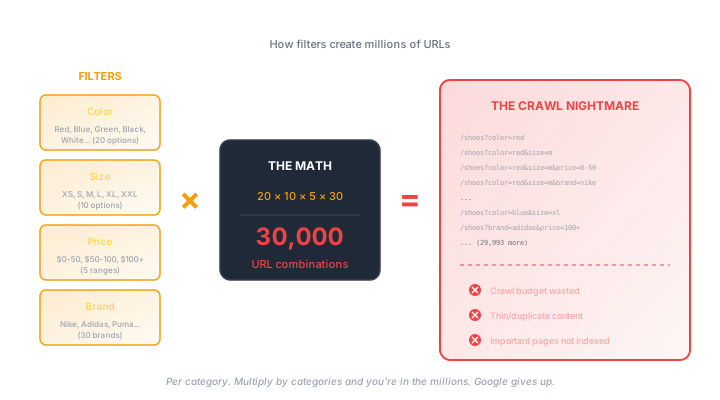
Filters create URLs. Color, size, price range, brand. Multiply these together and you get millions of URL combinations, most of which are thin content or duplicates. Google wastes crawl budget on these pages, important pages don't get indexed, and your site looks like spam.
The fix involves strategic use of robots.txt, noindex tags, canonical tags, and rel="next/prev" where appropriate. There's no one-size-fits-all solution. It depends on your catalog, your platform, and how users actually navigate.
Thin Product Pages
Every competitor uses the same manufacturer descriptions. Your product pages are duplicates of everyone else's. Google has no reason to rank yours over theirs. Unique content at scale is the answer, but it has to be done intelligently. User reviews, Q&A content, and strategic template enhancements where they add value.
Category Page Architecture
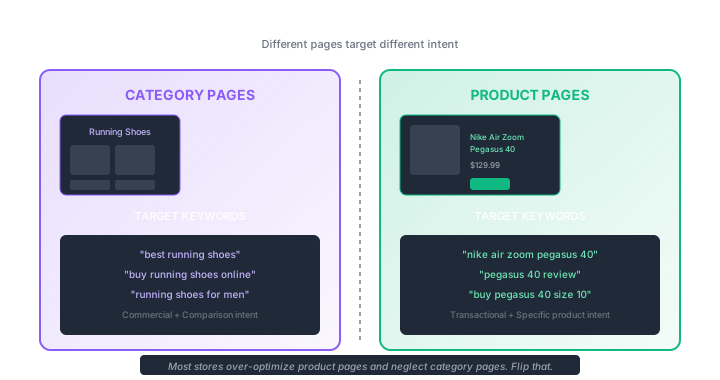
Category pages often rank better than product pages for commercial queries. But most stores neglect them. Thin category pages with just product grids, poor internal linking, no unique content. Fixing category architecture often has more impact than optimizing individual products.
Out-of-Stock and Discontinued Products
What happens when products go out of stock? If you 404 them, you lose any ranking equity. If you keep them indexed, users land on pages they can't buy from. The right approach depends on whether products come back in stock, whether there are alternatives, and how the catalog is structured.
Platform Limitations
Shopify, WooCommerce, Magento, BigCommerce, custom builds. Each has SEO strengths and weaknesses. Shopify's default URL structure is annoying. WooCommerce can be slow without optimization. Magento is powerful but complex. I've worked extensively with all major platforms and know their quirks.
What I Focus On
- Technical Architecture - Crawl optimization, indexation strategy, canonicalization rules
- Category Strategy - Hierarchy, internal linking, content templates
- Product Page Templates - Structured data, unique content opportunities, review integration
- Site Speed - Image optimization, lazy loading, platform-specific performance fixes
- Search Appearance - Rich snippets, product markup, merchant center integration
- Content Strategy - Buying guides, comparison content, top-of-funnel capture
Platform Experience
Shopify: Collections optimization, liquid template modifications, app ecosystem, headless Shopify considerations.
WooCommerce: Plugin conflicts, performance optimization, custom taxonomy structure, WordPress SEO integration.
Magento: Enterprise-level complexity, category management, extension evaluation, performance at scale.
Custom platforms: If your store runs on custom code, I can work with your developers to implement SEO requirements. I speak technical fluently.
Results to Expect
E-commerce SEO improvements often show up in:
Indexed page count. If Google is only indexing 10% of your products, that's a crawl/architecture problem. Fixing it means more products appearing in search.
Category rankings. Category pages ranking for commercial "best [product type]" and "buy [product type]" queries drive significant revenue.
Long-tail product visibility. When individual products rank for specific product searches, you capture high-intent buyers.
Rich results. Product rich snippets, review stars, price and availability in search results. These improve click-through rate on existing rankings.
Pricing
E-commerce SEO is typically an ongoing management engagement because catalogs change constantly. Products are added, discontinued, put on sale, reorganized. SEO needs continuous attention.
One-time e-commerce audit and technical roadmap: $2,000 to $5,000 depending on catalog size.
Monthly e-commerce SEO management: starts at $2,500/month for small to medium catalogs.